5 Truths to accept that will set you Free
5 min citit
Accept your circumstances
There are two types of circumstances in our lives: the ones we create and the ones we have no control over. The favourite statement of humankind is ‘I feel stuck’, and more often than not is blamed on circumstances.
The definition of stuck is not moving. And moving forward has nothing to do with conditions in your life but your ability to accept the pain of a possible failure. Or the pain of change. Remember to come to terms with the fact that a problem comes with emotional suffering, and the more you resist it, the more the pain expands. You can only get unstuck through the pain of change and the risk of things not going the way you hoped.
Because acceptance is painful. We know that our relationship with pain is to avoid it rather than embrace it. We fear emotional suffering simply because it is not comfortable.
M. Scott Peck suggests in his book The road less travelled that we have unrealistic expectations about how easy life should be. We think life is hard because we refuse to accept the pain of our problems.
M. Scott Peck says ‘once we truly know that life is difficult-once, we truly understand and accept it-then life is no longer difficult. Because once it is accepted, the fact that life is difficult no longer matters.’
Accept your background
Ok. One thing you need to hear is that we don’t have the same start in life. I’ll say it again-WE DO NOT HAVE THE SAME START IN LIFE.
And that’s ok. We are born in different countries, with different values, parenting styles, socioeconomic statuses, beliefs, and happiness levels.
While your environment shaped you throughout the years, it doesn’t define you entirely. And I’m here to remind you about the two powers that reside within you. The power of acceptance and the power of choice. The choice of not comparing to people who had an advantage over you.
You will get there, but it will take longer, and you have to accept it.
Accept the laws of your mind
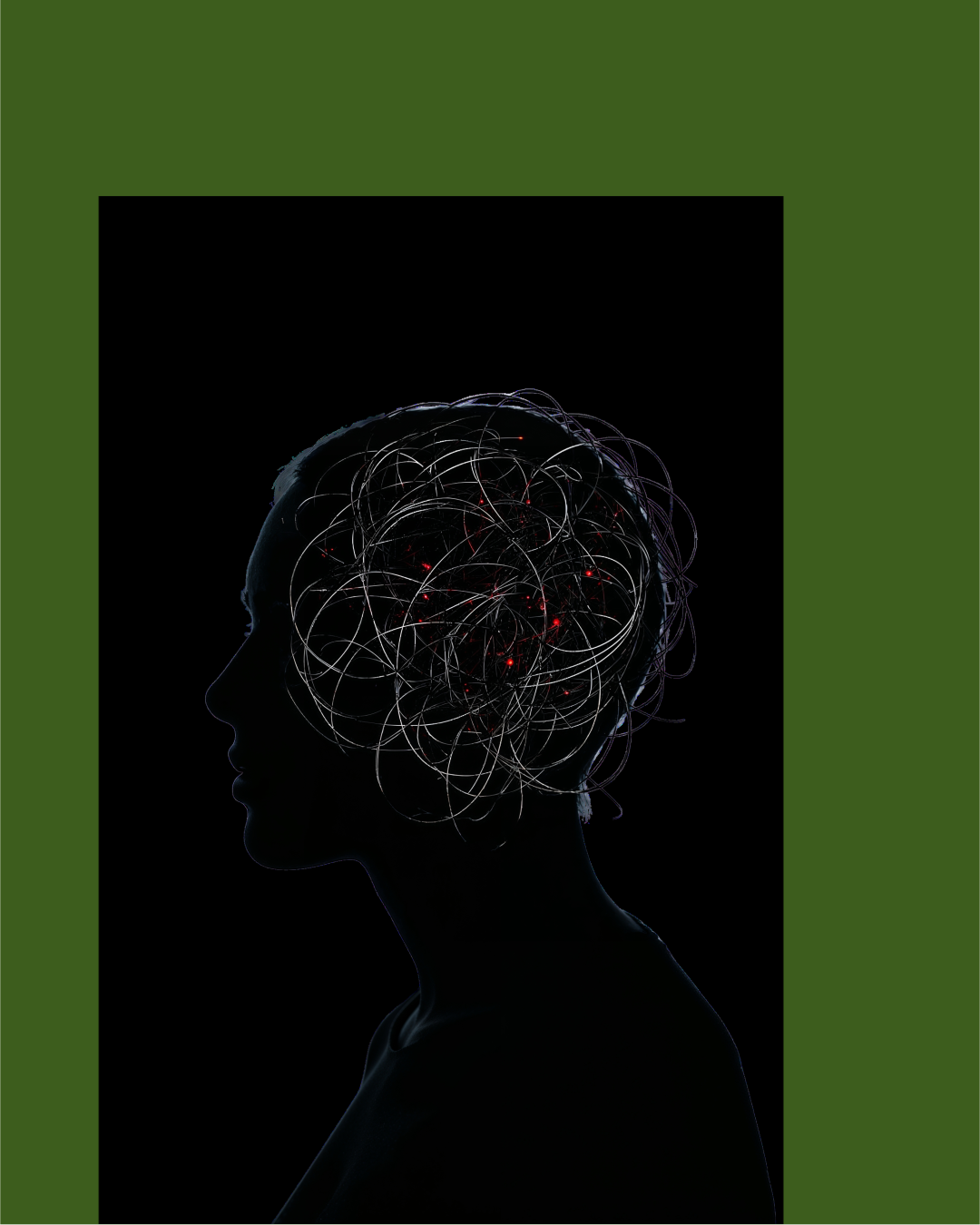
Our mind operates at two levels: conscious and subconscious. Your conscious mind is your rational mind, and the subconscious is the autopilot.
To simplify it, your conscious mind makes a choice, but your subconscious calls the shots on acting upon that choice or not. And this decision is determined by your memories or emotions linked to a specific experience.
If you find failure painful due to a past event from your childhood or adult life, you would be more likely to avoid trying anything that can make you fail. And let’s face it, the possibility of failure is pretty much everywhere.
Your subconscious will always protect you. It doesn’t make the difference between what’s real or imagined. If your mind senses your fear of challenges, it will stop you in your tracks to keep you safe. You call it being stuck, but it is just your subconscious doing its job of keeping you out of danger.
If you accept that this is the way your mind works, you will also accept your setbacks. Your subconscious always works in your favour. Use this knowledge wisely and feed your mind the right thoughts.

Accept rejection
Rejection feels like a punch in the stomach. Rejection will be painful, no matter how insignificant, whether romantic, work or social circumstances.
In the book, Emotional First Aid is stated that ‘the same brain regions get activated when we experience rejection as when we experience physical pain.’
But how can we make rejection easier to accept?
The same book tells us that we interpret rejection more personally than we should.
Whenever we get rejected, no matter the area of our lives, we’re spiralling with questioning what’s wrong with us. We impose a lot of criticism that further hurts our self-esteem and self-worth. Most of the time, the reasons have nothing to do with our shortcomings. Sometimes, we don’t fit into each other’s stories.
Accept rejection as a ‘fitting disadvantage’, not a reason to list what’s wrong with you.
It will always hurt; it’s how your body reacts, so don’t deny that pain and let it unfold, but don’t attribute the wrong reasons and extend your suffering.

Accept you’re not always right
I’m not denying that you have an intuition and a gut feeling that you should listen to. But as David Rahm presents in his book Let it go, one of the needs we should get rid of is the need to be right.
Despite our satisfaction from being right, the book presents a different approach. This intense need might be based on the negative beliefs we hold about ourselves.
When we expect ourselves to be always right, we seek validation. And we always seek validation when we lack self-esteem.
If you develop solid self-esteem, you won’t need to prove your intelligence every step of the way, and it will be so much easier to deal with the annoyance of being wrong sometimes.
Conclusion
We think we’re free. After all, we choose our jobs, where to live, whom to love, experiences and values. And yet, we are unaware of how chained we are to the nagging beliefs that stop us from becoming ourselves.
We look for reasons why nothing works and blame life for bringing millions of different problems. But ‘life is pain… au chocolat’. The sweetness is always in the blending.
References:
M. Scott Peck- The road less travelled
Guy Winch- Emotional first aid
David Rahman- Let it go
Dr Joseph Murphy- The power of your subconscious mind